Rubber Sidewalks Made From Scrap Tires

November 23rd, 2007 Posted in inventions, recycle, save money | 1 Comment » Make sure you like EcoJoes on Facebook to stay updated on green ways to save money and help the environment. Just click the "like" button below. Muchas gracias!
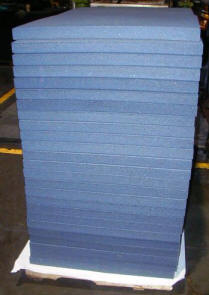

Just look at them!Americans throw out tons o’ tires each year.  In 2003, we threw out approximately 290 million scrap tires.  But the good news is, more and more are being recycled.  In 1990, only about 17% of our discarded tires were reused or recycled; by 2003, about 80.4% were being recycled.  Scrap tires can be used for many things, but until now, I did not know that they could be used for rubber sidewalks.

How Many Tires in Rubber Sidewalk?

It takes one tire to make about one square foot of rubber sidewalk.  That means that for every 400 square feet of rubber sidewalk made, two tons of scrap tires are kept out of the landfill!  Very good.

Who Invented Rubber Sidewalks?

I’m glad you asked.  Richard Valeriano, the Public Works Inspector for the city of Santa Monica, California, invented these.  His thinking was that they would be able to bend around growing tree roots, thus cutting down on the maintenance needed to keep the sidewalks up to snuff.  After testing the rubber sidewalks in Santa Monica for three years, they are now on the market.

Rubber Sidewalks Save Money

Yes, that is true.  When concrete sidewalks crack, they have to be entirely demolished and rebuilt.  So much money and time (and resources).  But with rubber sidewalks, they can be lifted for periodic tree root trimming and replaced at a fraction of the cost of concrete sidewalks.

Health Benefits of Rubber Sidewalks

With rubber sidewalks, there are no cracks where people can trip and get hurt.  Also, it is easier on the ol’ knees than walking/jogging on concrete sidewalks. 

I’d like to get a chance to check them out in person.  If anyone has tried them out, please let me know how rubber sidewalks made from recycled tires compare to old-school concrete sidewalks.


Bus, Bikes, and Cars

November 16th, 2007 Posted in bike, cars, green living, save money | No Comments » Make sure you like EcoJoes on Facebook to stay updated on green ways to save money and help the environment. Just click the "like" button below. Muchas gracias!


Next time you’re thinking about hopping in your car and driving somewhere, por favor consider riding a bike or taking the bus (if possible). Not only will you save money (it costs approximately 40 cents a mile to operate a car), but you’ll be polluting less AND helping to clear up congested roads. Plus, if you ride a bike, you’ll be getting swole at the same time from the exercise.

Dang, look at all that saved space!

Here’s another example to make you think twice about skipping the bus and driving in yo’ car.

How Many Miles Per Gallon Does Your Car Get?

November 14th, 2007 Posted in cars, eco footprint, save money | 8 Comments » Make sure you like EcoJoes on Facebook to stay updated on green ways to save money and help the environment. Just click the "like" button below. Muchas gracias!


Gasoline BullyEveryone should know how many miles per gallon their car gets, but many people do not. I didn’t even know my car’s MPG, until today when I calculated it out.
How to Find Your Official Gas Mileage

If you want the quickly know your approximate mpg, the good ol’ U.S. government has set up this website where you can look up your car’s gas mileage or compare miles per gallon for different cars. And just recently, the EPA has changed how it calculates MPG to more accurately depict real world driving conditions.

According to their site, my car gets 24 miles per gallon (highway and city gas mileage combined). Based on an average gas cost of $3.01 per gallon and average annual driving of 15,000 miles, that works out to a whopping $1883 each year just spent on gas! That’s not even counting car repair costs, rotating tires, or oil cost.

How to Find Out Your Own MPG

To find out your car’s actual gas mileage, you just need to do some simple mathematics.

  1. Fill up your car with gas, and reset your odometer to zero.
  2. Drive like normal.
  3. Next time you need gas, pull up to the gas station and write down how many miles you’ve driven since you last filled up.
  4. Fill up your car, and write down how many gallons o’ gasoline it took.
  5. To find your car’s MPG, divide your miles driven by gallons of gas. Voila!

Using this method, I divided my miles driven by gallons of gas (426.8 / 14.454) to get my actual gas mileage ( 29.5 mpg! ). Not too shabby, if I do say so myself.

Update: (June 2010) Sadly, I wrecked my old car about a month ago in a weak little accident. But, my new car (a Toyota Yaris), gets over 40 miles to the gallon! Hot diggity dog!

How many miles per gallon does YOUR car get?

Free Organic Green Tea Sample

November 8th, 2007 Posted in food, free, organic, save money | No Comments » Make sure you like EcoJoes on Facebook to stay updated on green ways to save money and help the environment. Just click the "like" button below. Muchas gracias!


That organic green tea looks delishAs far as I know, I’ve never had organic green tea. But that is all about to change, because Garden of Life is giving away free samples of their organic green tea. 4-6 weeks from now, I will be testing out the difference between “normal” green tea and organic green tea. The anticipation of that moment is killing me, I tell you.
Click here to get yourself a free sample of organic green tea. 4-6 weeks from now, you can have yourself a taste test of organic green tea versus non-organic green tea.

Litracon Concrete Lets Light Through

November 5th, 2007 Posted in inventions | 1 Comment » Make sure you like EcoJoes on Facebook to stay updated on green ways to save money and help the environment. Just click the "like" button below. Muchas gracias!


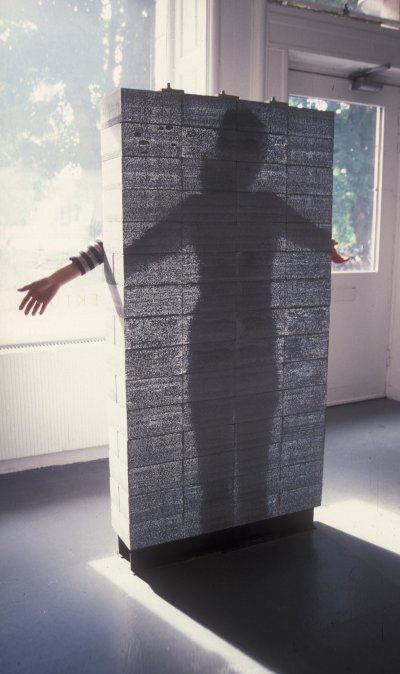
I recently found out about Litracon, and man does it seem like a great green invention. Blocks made of Litracon have the strength of standard concrete, but also have a system o’ embedded fiber optics that allow light to come through the blocks.

Litracon light-transmitting concrete

Litracon Inventor

Litracon was recently invented by Hungarian Áron Losonczi, who had this to say about his light-transmitting concrete: “Thousands of optical glass fibers form a matrix and run parallel to each other between the two main surfaces of every block. Shadows on the lighter side will appear with sharp outlines on the darker one. Even the colours remain the same. This special effect creates the general impression that the thickness and weight of a concrete wall will disappear.”

Benefits of Litracon

You can even build very thick walls with Litracon, as the light can be transmitted up to 20 meters through the concrete with no loss of brightness. If more and more buildings begin using this technology, more natural light can be used to light offices and stores. This could lead to huge drops in the amount of electricity used to light buildings, since they’d be naturally lit during the day. Also, people who get exposure to the sun are generally happier and more productive, so that is another reason for businesses to use this light-transmitting concrete.

I’m excited to see if Litracon catches on in the construction world. If you know of any real-life examples of someone building with Litracon, please let me know.

Play God with your Lil’ World In a Jar

November 4th, 2007 Posted in projects, reusing | 1 Comment » Make sure you like EcoJoes on Facebook to stay updated on green ways to save money and help the environment. Just click the "like" button below. Muchas gracias!


If you like the fun of having pets, but hate all the time and money it takes to take care of them, then have I got the solution for you! It’s called the Lil’ World in a Jar©®, and it combines the fun of pet ownership with the omnipotence of playing God to your tiny world. It has the added benefit of being able to teach you a thing or two about eco-systems, and all the interactions that take place in them. Here is how to make your very own Lil’ World in a Jar.

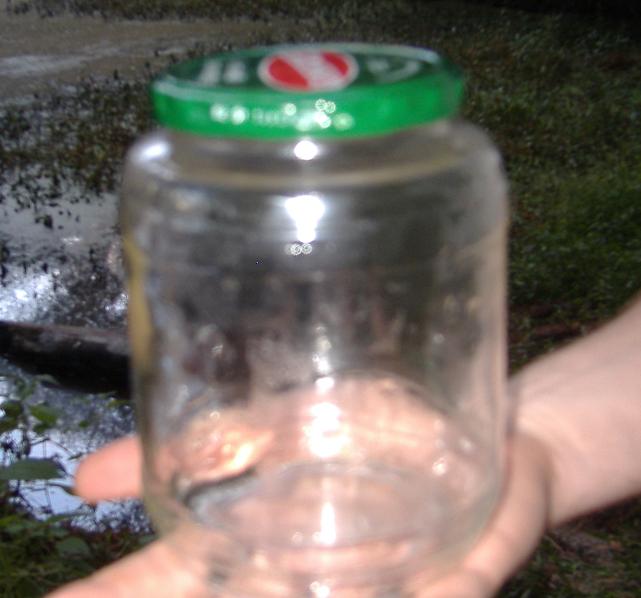
Get yourself a smooth-sided glass jar. Pickle-jar-size will do. You want smooth sides so that dirt doesn’t settle on the ridges of the inside of the jar.

Pickle Jar

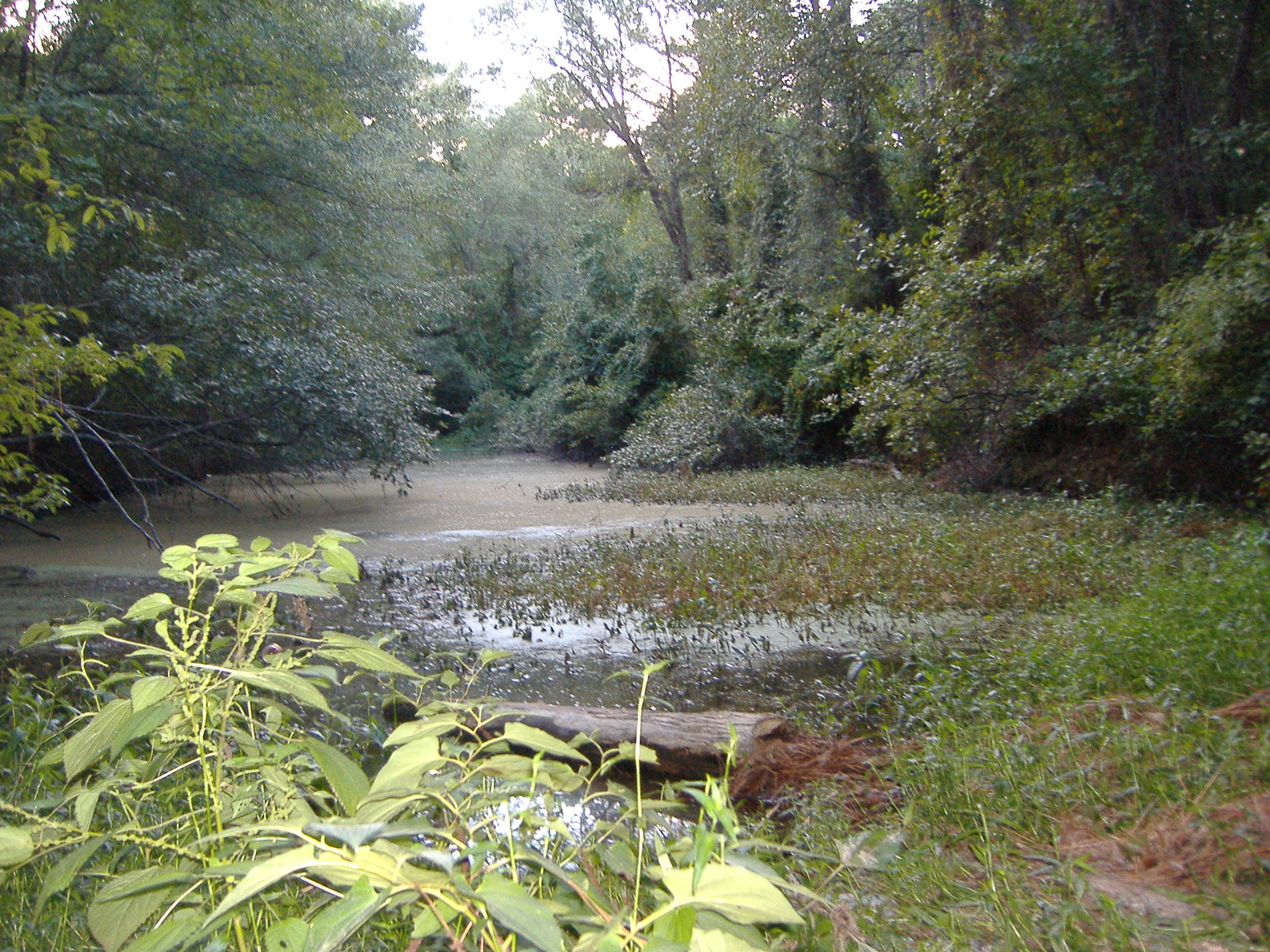
Grab your jar and go find a swamp or pond or lake. Look for a lot of plants in shallow water; there will be a lot of plants and animals in areas like that.

Lake Benson swamp

Using a cup, scoop some of the pond mud into your jar. Add water and swamp mess until your jar is almost full. Be sure to leave some room for air.

Scooping up some swamp mess for the jar

Seal up the jar, and bring it back to your house. Put it in a good, sunny window. The sunnier, the better.

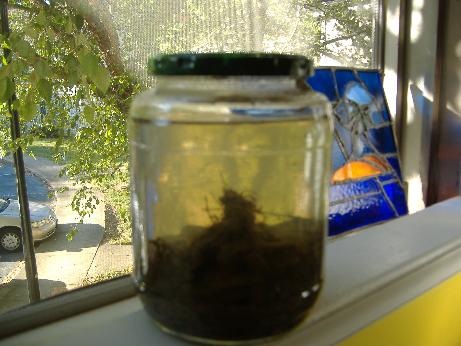
Lil’ World In A Jar

What Will Happen?

Over the next couple days, you will hopefully be able to see tiny creatures swimming back and forth. Some plants might even begin to grow. As time goes on, you might observe strange creatures and their habits, or you might see plants grow to dominate this lil’ world. There are many different variations as to what you could see, so the only way to know for sure is to go out and do this experiment.

As for my world in a jar, I came home one day to find that one of my cats had murderously knocked it off the windowsill and onto the floor. Everything in it was in abject chaos. After waterboarding the cat to punish it, I set the lil’ world in a jar back up, but all that has grown since that disaster has been algae. Hopefully you’ll have better luck with this. Good luck to anyone trying this out; it should turn out pretty cool.

The Day I used a Reusable Cloth Bag instead of Paper or Plastic

November 4th, 2007 Posted in green living, paper, plastic, reusing | 3 Comments » Make sure you like EcoJoes on Facebook to stay updated on green ways to save money and help the environment. Just click the "like" button below. Muchas gracias!


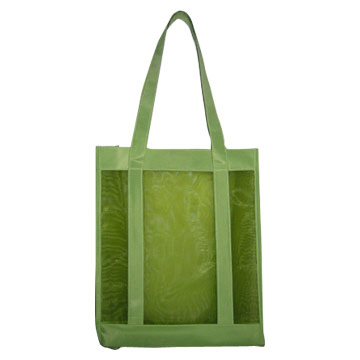
Reusable Cloth Bag Welp, today I finally took the plunge and actually managed to have a cloth bag in my car when I went to the grocery store. As I entered the store with my reusable cloth bag in hand, little did I know the amazing experience that I was about to have…

No Shopping Cart, No Problem

I passed rotch by the shopping carts, and just went straight to filling my cloth bag with some groceries. This was good, since I just could go straight to the food. Of course, I wasn’t getting too much stuff, but if you are, you might want to use that shopping cart.

Durability

After buying the groceries, I stuffed most of the food inside the reusable cloth bag. I didn’t have to worry about it ripping (like a plastic or even paper bag might have), so I just stuffed food into it until it couldn’t hold no more. Luckily, the tote bag held quite a bit, mainly because it had

More Room than a Plastic or Paper Bag

I was downright dumbfounded when I dared to discern the depth of the dapper cloth bag. I fit pretty much all the groceries I bought into it, making it easier to carry them all to the car and into mi casa. The only groceries I didn’t put into the bag were the ones that already came in a bag (a bag o’ apples). So the reusable cloth bag’s big volume was a definite advantage over plastic or paper bags.

Lack o’ Clutter

I would’ve used two or three plastic or paper bags today, but instead I just used one reusable cloth bag. The paper or plastic bags would’ve ended up taking up more room inside my house, but Mr. Cloth Bag just sits in the car, awaiting another mission to the grocery store.

Ecological Impact

This is what causes most people to choose reusable cloth bags over flimsy, disposable paper or plastic bags. Yes, it took some ink (and chemicals) to make my cloth bag, but now that I am reusing it again and again, that can be a sunk cost. If I was to continue to use paper and plastic bags, each one would have a double environmental impact; the considerable chemicals used in their production, plus the impact of their disposal, whether it’s in a landfill, or disposed by burning it.

Using a reusable cloth bag seems to be the way to go. It’s a tiny difference that everyone can easily make, and instead of being a sacrifice they have to make, it’ll actually give them the same benefits that I enjoyed today. So be cool, and use (and reuse) that cloth bag with pride.

Oh yeah, I got my reusable cloth bag for free. So they’re not too expensive.