paper Category

No More Credit Card Offers

February 18th, 2008 by ecojoe in paper, plastic


Credit card offers are no fun. A bunch of paper gets wasted, lots o’ gas is burned to deliver the credit card offers, and then they just fill up your mail box.

Well I say “No mas”. Here is how to stop getting credit card offers:

Go to Opt Out Pre-Screen and fill out the short form, or call 1-888-5-OPTOUT.

I was worried it was a scam, but it turns out that even the good ol’ government recommends this site.  So I went ahead and filled out the form (I left my SSN blank, just in case), and am now several months away from being free of credit card offers.  Hallelujah.

P.S.  You can also opt out of getting phone books here.


Paper Cups Versus Styrofoam Cups: Surprise Winner

February 12th, 2008 by ecojoe in food, green business, paper, recycle, styrofoam


This is on the front page of Care2.com, por favor go and vote for it!
One more drop…Lil’ story; there’s a coffee place near here called Cup A Joe, which has some good coffee and a really nice atmosphere that reminds me of good ol’ Asheville. I’ve been there many-a-time, since they have two locations around NC State.

Anyhoo, last week, mi jefe wondered aloud why Cup A Joe uses styrofoam cups instead of paper. I was like dang, I don’t know. So I wrote them an email asking if they’d considered using paper cups, and asking how they could use styrofoam cups when they knew it made Captain Planet weep green tears. I got a quick reply which showed that they had indeed thought of “green” issues when making their business decisions:

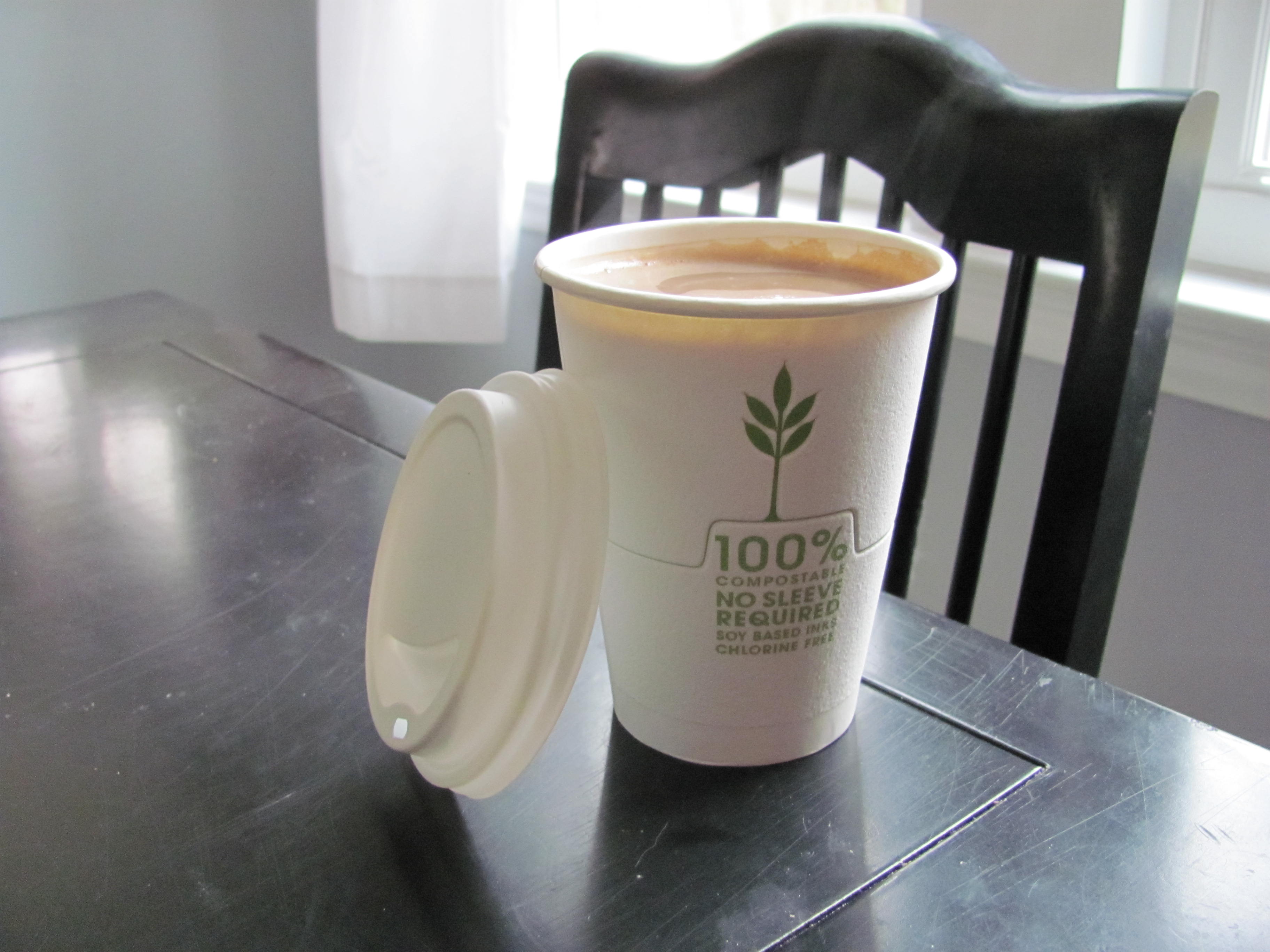
Paper Cups Cause More Trash than Styrofoam Cups

It turns out that when Cup A Joe used paper cups, “almost 100% of [their] customers demand[ed] the added cardboard sleeve”, which the styrofoam cups do not require.

Also as well additionally, it turns out styrofoam is an excellent material for recycling. Here’s what Cup A Joe had to say: “We recycle a large percentage of the cups. Many customers return their used cups for that purpose. It is a small expense for us, but worth it.”

Paper Cups Don’t Biodegrade

Well, they do eventually (as does anything, eventually), but it takes much more time than I’d thought for a paper cup to biodegrade. The gubmint says, “Modern landfills are designed to inhibit degradation so that toxic wastes do not seep into the surrounding soil and groundwater. The paper cup will still be a paper cup 20 years from now.”

Green cafe…Paper Cups Use More Raw Materials and Energy Than Styrofoam (And Cost More)

This was a surprise to me.

“A study by Canadian scientist Martin Hocking shows that making a paper cup uses as much petroleum or natural gas as a polystyrene cup. Plus, the paper cup uses wood pulp. The Canadian study said, ‘The paper cup consumes 12 times as much steam, 36 times as much electricity, and twice as much cooling water as the plastic cup.’ And because the paper cup uses more raw materials and energy, it also costs 2.5 times more than the plastic cup.”

Reusable Cups Are Teh Way To Go

Final thoughts from Cup A Joe:

“Finally, we have always tried to provide an atmosphere and a level of service that sort of induces folks to sit down and enjoy their coffee in our shops. My guess is that we do more ‘eat-in’ business than all of the Starbucks in Raleigh put together. This sort of business means our people have to hustle to keep up with washing dishes, but also that neither paper, nor cardboard, not styro is needed to consume the coffee. Anyway, hope this helps. And thanks for asking. Frankly, we are surprised that more people don’t ask.”

There you have it. A good eco-friendly reason to (if you must use disposable cups) use styrofoam cups instead of paper cups. It sounded crazy to me at first, but after reading about it, I realized it was crazy like a fox.


How to Stop Phone Book Delivery in 4 Minutes

February 5th, 2008 by ecojoe in green living, paper


Phone books fo’everA couple weeks ago I came home and saw a phone book sitting in front of my front door. This has happened many times in the past. As usual, I put it right in the recycling bin, slowly shaking my head as I pondered why they keep sending phone books out to people when most people never even open them. It’s a big waste of paper and precious ink, not to mention the gas it takes to deliver phone books nationwide each year. So I did a lil’ research, and found out how to stop phone book delivery once and for all…

Call 1-(877)-243-8339

I just called this number to test it out, and within about 4 minutes I had opted out of getting phone books. The person on the phone was friendly and helpful, although a bit confused at first (she thought I wanted to get MORE phone books delivered to my house). So call that number, and in less than 4 minutes, you won’t have to worry about getting any more phone books. Huzzah.

P.S. To see where to recycle your old phone books, go HERE and optically scan the provided information.

P.P.S. Here’s a funny prank done by some hoodlums with phone books.


How to Save Energy (And Money) in the Work Place

January 28th, 2008 by ecojoe in energy conservation, paper, reusing, save money, work


Work. Can’t live with it, can’t live without it. Am I right, people? Welp, until you hit it rich with a lottery ticket (or by making millions off your green contraption), work will probably be a big part of your life. As long as you’re going to be there, you may as well try to “keep it green”, as the youngsters like to say.

paper-stack-is-back-jack.jpgReuse Paper at Work

Do you know how much printer paper is used every single day by offices world-wide? A lot. That’s how much. But here’s a simple tip: when someone prints something, it leaves one side of paper blank. At my work, we put paper like this in a scrap bin next to the printer. If you’re printing something that doesn’t need to look “official”, print it on the blank side of the used paper. Voila, paper use cut in half.

light-switch.jpgTurn Off Them Lights

Too often in today’s work-a-day hustle n’ bustle world, people leave their lights on at work when they leave to get a few fitful hours of rest at home. A simple flip of a switch can save 15 hours’ worth of light-energy a day, slashing your electric bill like a serial killer.

Hoo doggies, it’s hotGo Easy on the Thermostat

Try to use your air conditioner and heater sparingly. Oftentimes, there are other ways to regulate the temperature of your office. At my work here, when it’s hot inside, we can usually cool off the building by opening some windows. If it’s cold, use a low temperature setting on the thermostat. Try to use the AC and central heating as little as possible (but do use them if the temperature is unbearable).

There are three simple ways to save energy and money in the workplace. If every company would follow these three, simple steps, just think how much money (and energy and paper) could be saved. So please, print out this here list, and tape it to the water cooler immediately. By doing so, you will have done your lil’ part in saving the Earth.


The Day I used a Reusable Cloth Bag instead of Paper or Plastic

November 4th, 2007 by ecojoe in green living, paper, plastic, reusing


Reusable Cloth Bag Welp, today I finally took the plunge and actually managed to have a cloth bag in my car when I went to the grocery store. As I entered the store with my reusable cloth bag in hand, little did I know the amazing experience that I was about to have…

No Shopping Cart, No Problem

I passed rotch by the shopping carts, and just went straight to filling my cloth bag with some groceries. This was good, since I just could go straight to the food. Of course, I wasn’t getting too much stuff, but if you are, you might want to use that shopping cart.

Durability

After buying the groceries, I stuffed most of the food inside the reusable cloth bag. I didn’t have to worry about it ripping (like a plastic or even paper bag might have), so I just stuffed food into it until it couldn’t hold no more. Luckily, the tote bag held quite a bit, mainly because it had

More Room than a Plastic or Paper Bag

I was downright dumbfounded when I dared to discern the depth of the dapper cloth bag. I fit pretty much all the groceries I bought into it, making it easier to carry them all to the car and into mi casa. The only groceries I didn’t put into the bag were the ones that already came in a bag (a bag o’ apples). So the reusable cloth bag’s big volume was a definite advantage over plastic or paper bags.

Lack o’ Clutter

I would’ve used two or three plastic or paper bags today, but instead I just used one reusable cloth bag. The paper or plastic bags would’ve ended up taking up more room inside my house, but Mr. Cloth Bag just sits in the car, awaiting another mission to the grocery store.

Ecological Impact

This is what causes most people to choose reusable cloth bags over flimsy, disposable paper or plastic bags. Yes, it took some ink (and chemicals) to make my cloth bag, but now that I am reusing it again and again, that can be a sunk cost. If I was to continue to use paper and plastic bags, each one would have a double environmental impact; the considerable chemicals used in their production, plus the impact of their disposal, whether it’s in a landfill, or disposed by burning it.

Using a reusable cloth bag seems to be the way to go. It’s a tiny difference that everyone can easily make, and instead of being a sacrifice they have to make, it’ll actually give them the same benefits that I enjoyed today. So be cool, and use (and reuse) that cloth bag with pride.

Oh yeah, I got my reusable cloth bag for free. So they’re not too expensive.


Get Rid of Unwanted Catalogs

October 18th, 2007 by ecojoe in free, green living, paper

Everyone likes to get mail. When you open your mailbox and see that someone else has taken the time to handwrite a letter to you, it’s enough to bring tears to your eyes. But all too often, the only thing in your mail box (besides bills) are catalogs of junk. You don’t want them. Why did that company send them to you? If only there was a way to stop them from doing this and wasting all that paper and time…

Welp, it turns out that there’s a website that stops junk catalogs before they start. It’s called Catalog Choice, and their mission is to stop these junk catalogs from ever being sent or even made. It turns out that over 8 million tons of trees are used each year for paper catalogs — most of these are unwanted catalogs that are thrown away as soon as they’re received. By using their website, you can help out the environment while at the same time helping out yourself. You and the trees win, and the only losers are the catalogs that you didn’t even order in the first place!

To stop getting unwanted catalogs in your mail box, just visit their site by click this:


Paper nor plastic

October 5th, 2007 by ecojoe in green living, paper, plastic, reusing

“Paper or plastic?” It’s an age-old question that has haunted people since the dawn of time, if not longer.  Some people get paper bags for their strength.  Others get plastic bags for the fun handles.  But if you’re trying to lower your eco-footprint, then you are basing this decision on its environmental impact.  Hopefully, this here will help you make your decision.

Consumption:

Paper Bags: American use over 10 billion paper bags each year. Around 14 million trees are chopped down each year for paper bag production.

Plastic Bags: If you thought 10 billion was a lot, how about this: around 100 billion plastic bags are used in America each year. That takes about 12 million barrels of oil annually, just for bags.  Dang.

Production:

It takes close to 4 times as much energy to make a paper bag compared to a plastic bag. But, plastic bags are made from oil (non-renewable resource), while paper bags are made from trees (renewable resource).

SmokestacksPollution:

Paper Bags: Toxic chemicals used in paper bag production (like bleach and acid) contribute to water pollution and air pollution (acid rain).  Surprisingly, paper bag production generates 70 percent more air pollution and 50 times more water pollution than plastic bags.

Plastic Bags: Plastic bag production requires hazardous chemicals also.  According to an EPA ranking of chemicals that generate the most hazardous waste, 5 of the top 6 chemicals are used in plastics production.  Plus, hundreds of thousands sea animals die each year from eating plastic bags, which clog their digestive tracts or choke them.

Recycling:

Paper Bags: Lots of chemicals have to be used to recycle paper bags. Once a bag is recycled, it’s more likely to be used to make cardboard than another paper bag.

Plastic Bags: A lower percentage of plastic bags than paper bags are recycled. Increasingly, plastic bags collected for recycling are instead sent to countries such as China and India, where they can be cheaply burned due to weak environmental laws.  Good ol’ India and China.

Biodegradable:

Paper Bags: Paper bags do break down after a while, but not if they’re in a modern landfill. In that case, 95 percent of the garbage is buried under layers of soil, so air and sunlight can’t reach the bags to decompose them.  So they just sort of sit there.

Plastic Bags: They don’t break down.

My Conclusion:

EcoJoes - Paper Nor Plastic - Reusable Cloth bagUse a reusable bag. Keep a cloth bag in your car, and just use that whenever you go shopping for something.  When I worked at Fresh Market in Asheville, plenty of people came through with cloth bags.  These bags can hold more than paper or plastic bags, they’re stronger, and you don’t end up getting a bunch of disposable bags that will clutter up your house.  Plus, you can get bags with jawsome designs or slogans on the side, which makes you cooler than them people that are using plain ol’ plastic or paper bags, thus bolstering your poor self-esteem.   And that is what really matters.