Good ol’ Wal-Mart and Costco have started using a new design for their milk jugs, and I think they’ve come up with a real winner. The new design has a whole mess of environmental and cost advantages compared to the milk jug design that you’re probably used to, but there are some people that jes’ plain don’t care for it. Here’s a brief summary of its pros and cons.
New Milk Jug Design Pros
Less shipping materials - The old jugs had to be packaged with heavy shipping crates. The new ones can be stacked with just a layer of cardboard between them.
More efficient transport - Less shipping materials means more milk jugs can be transported in each truck, so companies save money on gas and cut down on air pollution.
Shipping labor cut in half
Water usage cut by 60-70% - The old shipping crates had to be sprayed off after each run, since milk would spill on them and birds would roost in them
Amy Wise, a homemaker in Ohio, said the new-fangled gallon jug spilled milk everywhere. Judging from the picture, I’d say her main problem is that she’s trying to pour the milk into an imaginary cup in her left hand. No wonder she looks frustrated.
Many people say the new milk jugs are harder to pour. But I think with more practice, people will get used to them quickly. With all the benefits (less pollution, cheaper milk, easier transportation, and more efficient use o’ materials), methinks that the new milk jug may be here to stay.
* The bodacious picture of Amy Wise was taken by David Maxwell of The New York Times.
Credit card offers are no fun. A bunch of paper gets wasted, lots o’ gas is burned to deliver the credit card offers, and then they just fill up your mail box.
Well I say “No mas”. Here is how to stop getting credit card offers:
Go to Opt Out Pre-Screen and fill out the short form, or call 1-888-5-OPTOUT.
I was worried it was a scam, but it turns out that even the good ol’ government recommends this site. So I went ahead and filled out the form (I left my SSN blank, just in case), and am now several months away from being free of credit card offers. Hallelujah.
Wow, this seems like such a great way to reuse plastic bottles. Risha Sowa, an Englishman (and official EcoJoes Eco Hero), moved to Mexico back in the ’90s and built his own private island using around 250,000 plastic bottles and sand from local beaches. He had his own solar cooker, composting toilet, and lots of pets running around. Unfortunately, Spiral Island was beached during a hurricane, but Sowa is now building a new and improved version. Here’s a video of the original Spiral Island:
Bonus Fun Fact: The host of that video is none other than good ol’ Dave Lister (Craig Charles) from Red Dwarf, a great show if I do say so myself.For more information on Rishi’s past and present islands, I heartily suggest you check out his website: Spiral Islanders.
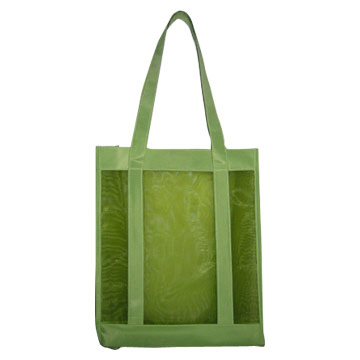
Welp, today I finally took the plunge and actually managed to have a cloth bag in my car when I went to the grocery store. As I entered the store with my reusable cloth bag in hand, little did I know the amazing experience that I was about to have…
No Shopping Cart, No Problem
I passed rotch by the shopping carts, and just went straight to filling my cloth bag with some groceries. This was good, since I just could go straight to the food. Of course, I wasn’t getting too much stuff, but if you are, you might want to use that shopping cart.
Durability
After buying the groceries, I stuffed most of the food inside the reusable cloth bag. I didn’t have to worry about it ripping (like a plastic or even paper bag might have), so I just stuffed food into it until it couldn’t hold no more. Luckily, the tote bag held quite a bit, mainly because it had
More Room than a Plastic or Paper Bag
I was downright dumbfounded when I dared to discern the depth of the dapper cloth bag. I fit pretty much all the groceries I bought into it, making it easier to carry them all to the car and into mi casa. The only groceries I didn’t put into the bag were the ones that already came in a bag (a bag o’ apples). So the reusable cloth bag’s big volume was a definite advantage over plastic or paper bags.
Lack o’ Clutter
I would’ve used two or three plastic or paper bags today, but instead I just used one reusable cloth bag. The paper or plastic bags would’ve ended up taking up more room inside my house, but Mr. Cloth Bag just sits in the car, awaiting another mission to the grocery store.
Ecological Impact
This is what causes most people to choose reusable cloth bags over flimsy, disposable paper or plastic bags. Yes, it took some ink (and chemicals) to make my cloth bag, but now that I am reusing it again and again, that can be a sunk cost. If I was to continue to use paper and plastic bags, each one would have a double environmental impact; the considerable chemicals used in their production, plus the impact of their disposal, whether it’s in a landfill, or disposed by burning it.
Using a reusable cloth bag seems to be the way to go. It’s a tiny difference that everyone can easily make, and instead of being a sacrifice they have to make, it’ll actually give them the same benefits that I enjoyed today. So be cool, and use (and reuse) that cloth bag with pride.
Oh yeah, I got my reusable cloth bag for free. So they’re not too expensive.
“Paper or plastic?” It’s an age-old question that has haunted people since the dawn of time, if not longer. Some people get paper bags for their strength. Others get plastic bags for the fun handles. But if you’re trying to lower your eco-footprint, then you are basing this decision on its environmental impact. Hopefully, this here will help you make your decision.
Consumption:
Paper Bags: American use over 10 billion paper bags each year. Around 14 million trees are chopped down each year for paper bag production.
Plastic Bags: If you thought 10 billion was a lot, how about this: around 100 billion plastic bags are used in America each year. That takes about 12 million barrels of oil annually, just for bags. Dang.
Production:
It takes close to 4 times as much energy to make a paper bag compared to a plastic bag. But, plastic bags are made from oil (non-renewable resource), while paper bags are made from trees (renewable resource).
Pollution:
Paper Bags: Toxic chemicals used in paper bag production (like bleach and acid) contribute to water pollution and air pollution (acid rain). Surprisingly, paper bag production generates 70 percent more air pollution and 50 times more water pollution than plastic bags.
Plastic Bags: Plastic bag production requires hazardous chemicals also. According to an EPA ranking of chemicals that generate the most hazardous waste, 5 of the top 6 chemicals are used in plastics production. Plus, hundreds of thousands sea animals die each year from eating plastic bags, which clog their digestive tracts or choke them.
Recycling:
Paper Bags: Lots of chemicals have to be used to recycle paper bags. Once a bag is recycled, it’s more likely to be used to make cardboard than another paper bag.
Plastic Bags: A lower percentage of plastic bags than paper bags are recycled. Increasingly, plastic bags collected for recycling are instead sent to countries such as China and India, where they can be cheaply burned due to weak environmental laws. Good ol’ India and China.
Biodegradable:
Paper Bags: Paper bags do break down after a while, but not if they’re in a modern landfill. In that case, 95 percent of the garbage is buried under layers of soil, so air and sunlight can’t reach the bags to decompose them. So they just sort of sit there.
Plastic Bags: They don’t break down.
My Conclusion:
Use a reusable bag. Keep a cloth bag in your car, and just use that whenever you go shopping for something. When I worked at Fresh Market in Asheville, plenty of people came through with cloth bags. These bags can hold more than paper or plastic bags, they’re stronger, and you don’t end up getting a bunch of disposable bags that will clutter up your house. Plus, you can get bags with jawsome designs or slogans on the side, which makes you cooler than them people that are using plain ol’ plastic or paper bags, thus bolstering your poor self-esteem. And that is what really matters.