If you’re contemplating upgrading your simple hovel into a natural palace, you might want to check out these green building tips n’ tricks thoughtfully provided by AbleSkills. Thanks, Ableskills!
Hey you. You trying to save some money, AND reduce your impact on the good ol’ planet Earth? Well here are some easy ways to do both, by making your home more efficiency and environmentally friendly.
Some notable tidbits from this nifty infographic:
Up to 40% (almost half!) of our drinking water literally goes down the toilet.
Low-flow showerheads can use less than half what a normal, wasteful, Earth-hurting showerhead uses
Installing good insulation can cut your heating/cooling costs by 30%!! Hot dang.
Putting aerators on all your water faucets can cut your water use by up to HALF!
I’ll let you peruse the rest of it at your leisure; chiggity check the helpful picture below:
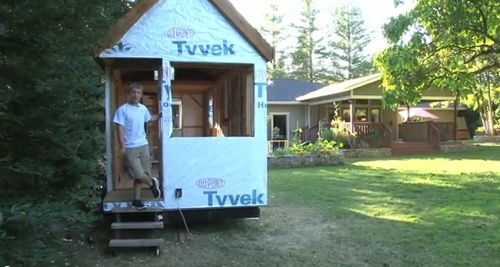
Have you ever wanted a tiny house of your own, but thought it’d be way too hard to build? What if you found out a 16-year-old (by the name of Austin Hay) was about to finish his very own small home? It’s just 130 square feet, but it’s 100% custom-made, plus has no mortgage!
Not only does it waste a lot less building materials to build (plus use a less resources to maintain) a tiny house, but it can save you a chunk o’ change. As Mr. Hay himself put it, “Living small means less bills, living big means more bills. I don’t want to pay big bills”.
Without further ado, I’ll let Austin take it away and give you a tour of his very own tiny house.
If you’re all pumped up now to go off and build a lil’ casa, take a looksie at this tiny house book, first, just to see what you’re getting into.
I have to say, I enjoyed reading it a lot. If you have any questions or curiousity about living in a tiny house (or even just a smaller-than-normal house), then I recommend this book. It examines this lifestyle from many different angles, and covered some questions I didn’t even have a clue I had.
I’ll go into some of what’s inside Little House on a Small Planet here, in bullet point form: READ MORE »
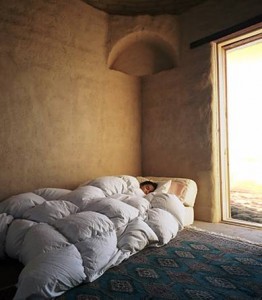
Earthships. The very name conjures up an image of otherworldliness, but there are more earthships around than you might think. Whether you have no idea what an earthship is, or you are an earthship guru, hopefully you can enjoy the following moving pictures (“talkies” as the old-timers say), and maybe even learn a thing or two about these mystical structures.
Earthship Video Uno
Earthship Video Dos
Earthship Video Tres
Dang, now wasn’t that informative? If you feel that your brain can handle yet MORE information about earthships, then head on over to Earthships 101.
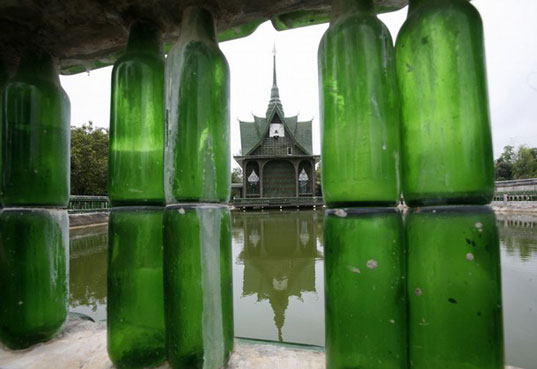
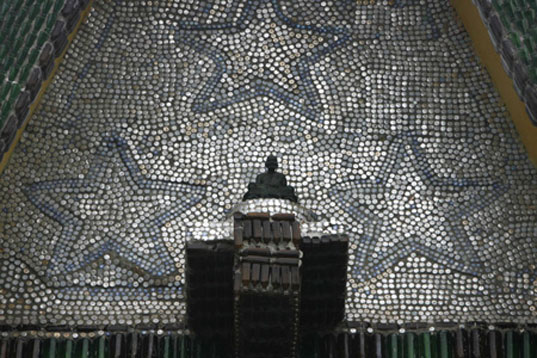
One night in Bangkok and the world’s your oyster. But what about the rest of Thailand? Journey with me, if you please, 370 miles to the north-east of Bangkok to the Wat Pa Maha Chedio KaewSisaket temple (nicknamed Wat Lan Kuad, or “Temple of a Million Glass Bottles”).
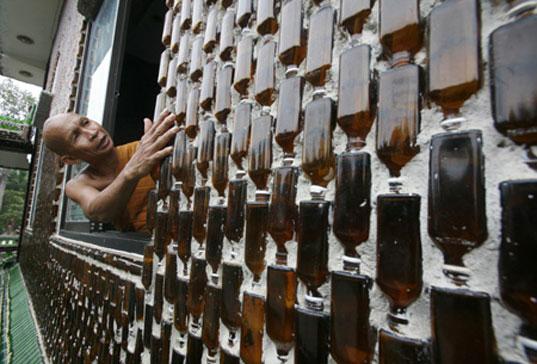
Wat Lan Kuad monks started collecting discarded glass bottles way back in 1984 so they could decorate their buildings. Apparently, their creativity with how they reused the glass bottles inspired tourists to start bringing bottles to the temple. Today, their seemingly fragile (yet actually pretty sturdy) temple is infused with over a million reused glass bottles! Hot dang!
I’ll leave you with some pictures of this magnificient temple. It’s purty cool how they used the glass bottles and even the metal caps of the bottles. ¡Disfrute los fotos!
I found out about this from good ol’ Been-Seen, who in turn found out about it from some Yahoo page that don’t exist no more.
Right, let’s “cut to the chase”, as “they” say. There’s a stray cat that roams our neighborhood (not Gimpy the stray cat, a different one), and me and Tiff have been feeding him/trying to adopt him for a while. So far he’s not ready to stay in our house, and since the weather is ’bout to start getting chilly, I decided it was high time to build him his very own homemade cat house from reused materials. Luckily I still had a bunch o’ materials left over from our kitchen remodeling, even after making a kitchen cart from reused materials.
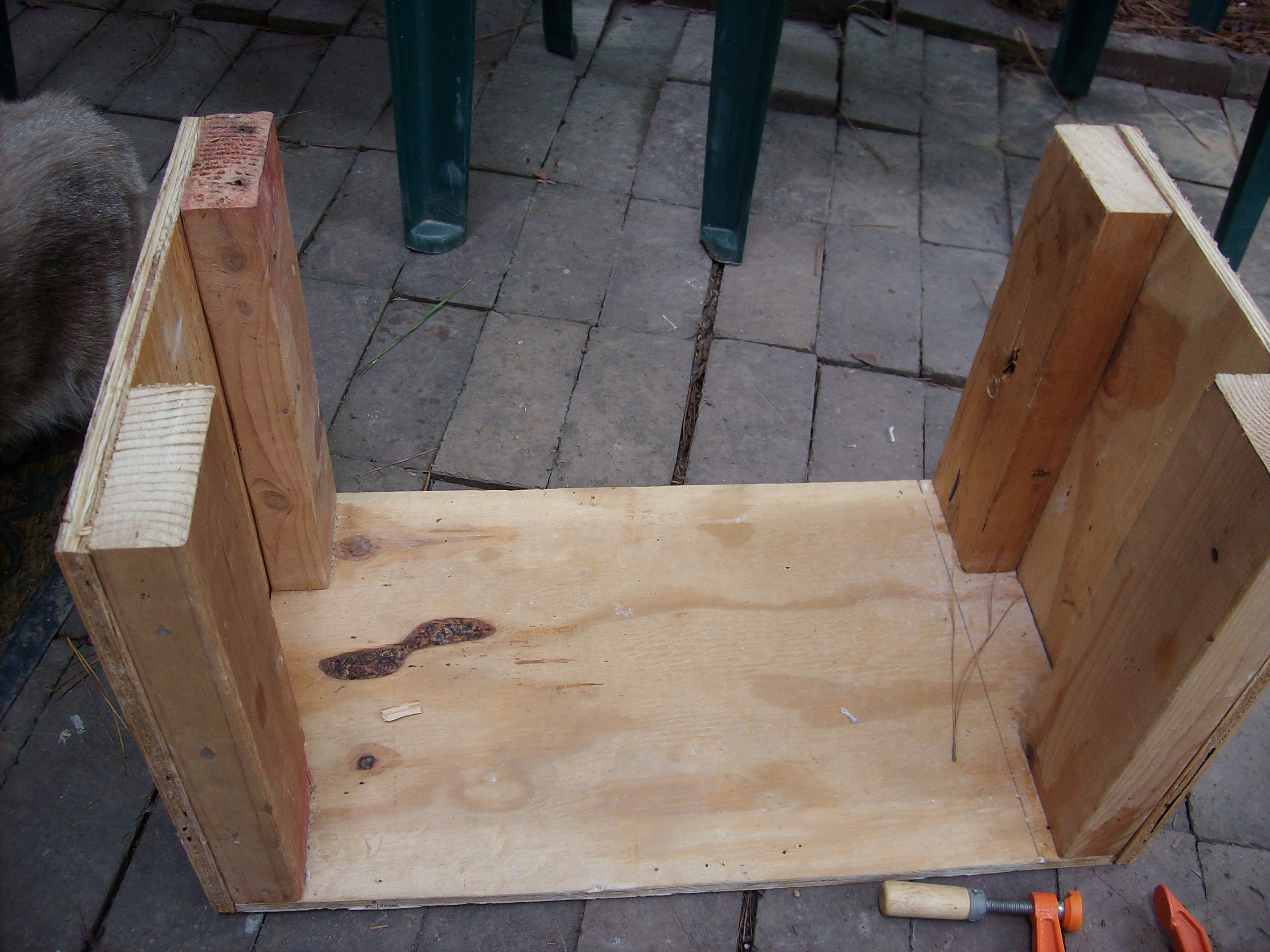
First, I cut the floor and walls from some old wood I had from our kitchen remodeling. After some screws n’ glue, this is what I had:
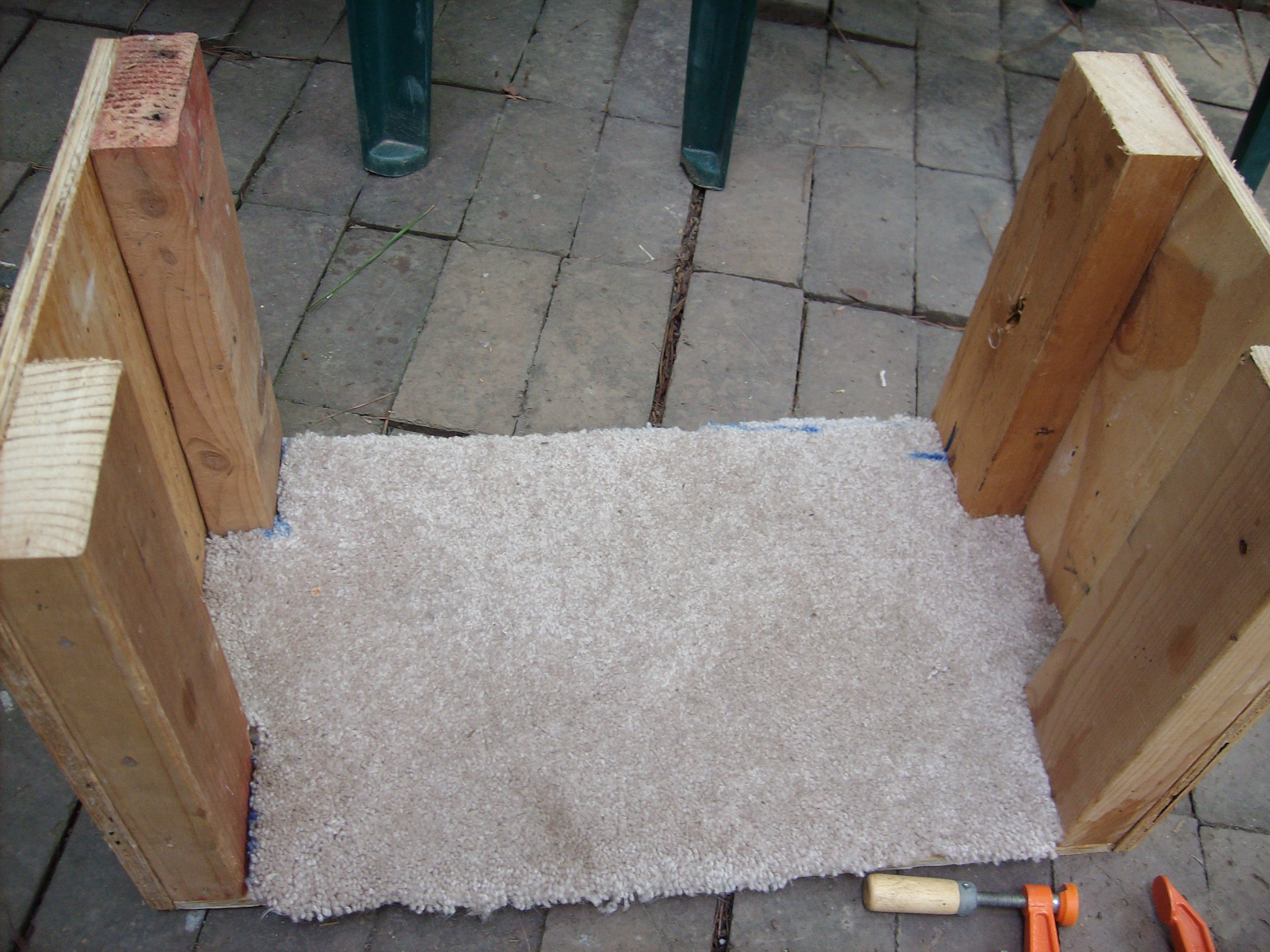
I had some carpet left over from mi casa, so I cut out a lil’ chunk and oh-so-carefully fitted it to Charlie’s cat house.