5 Steps to Becoming an Eco-Hero

October 25th, 2007 Posted in eco hero, green living, save money | 5 Comments » Make sure you like EcoJoes on Facebook to stay updated on green ways to save money and help the environment. Just click the "like" button below. Muchas gracias!


EcoJoe - Eco-HeroMost people now-a-days try to help out the environment, even if it’s by doing something small, like turning off a faucet while you brush your teeth, or not littering. But for some, that is not enough. By following the handy green tips below, you can turn yourself from a zero to an eco-hero.

1. Wear the Same Clothes for Days on End

I’m not saying that I’ve ever done this (of course not), but I’ve heard of people who’ll wear the same clothes without washing them, as long as they’re not too dirty. The average washing machine cycle uses about a kilowatt-hour of energy, not to mention all that water. And dryers are one of the top energy users in a house. The ultimate eco-hero will continue wearing his (or her) clothes until they are tattered rags, not even washing them once.

2. Don’t Use Napkins, Ever

Think about this one. If you use cloth napkins, you have to wash them. If you use paper napkins, you have to throw them away. But if you don’t use a napkin at all, you will cut your napkin-related environmental impact to zero! If you must wipe your hands on something, just use your shirt, which you should’ve already been wearing for days on end (see #1).

3. Hitch-hike Everywhere You Go

Driving alone is for suckers. And paying for gas? Not at today’s outrageous prices. All it takes to get from Point A to Point B is a thumb and a smile. You’ll meet tons of interesting people, plus who knows where you’ll wind up! Of course, if you’re fine with boring ol’ “do-it-yourself” driving, then this tip is not for you.

4. Shower in the Rain

Next time the skies darken and you hear some thunder, grab a bar of soap and run outside. It’s shower time. Environmental savings include lowered energy use, decreased water use, and increase of feeling one with nature.

5.Trash Buffet

This, perhaps, is what truly separates the eco-heroes from the eco-zeroes. Do you have any idea how much food restaurants send to landfills every day? I don’t, but however much it is, it’s too much. If you wander the back alleys behind a group of restaurants, you are treated to a veritable trash buffet of nutritional goodness, plus you help keep the landfills a little emptier.

If you can follow these five steps, then you will be an official eco-hero. Just send me an email and I will place you into the Eco Hall of Fame. Do you have what it takes to be an eco hero?

Get Rid of Unwanted Catalogs

October 18th, 2007 Posted in free, green living, paper | 2 Comments » Make sure you like EcoJoes on Facebook to stay updated on green ways to save money and help the environment. Just click the "like" button below. Muchas gracias!

Everyone likes to get mail. When you open your mailbox and see that someone else has taken the time to handwrite a letter to you, it’s enough to bring tears to your eyes. But all too often, the only thing in your mail box (besides bills) are catalogs of junk. You don’t want them. Why did that company send them to you? If only there was a way to stop them from doing this and wasting all that paper and time…

Welp, it turns out that there’s a website that stops junk catalogs before they start. It’s called Catalog Choice, and their mission is to stop these junk catalogs from ever being sent or even made. It turns out that over 8 million tons of trees are used each year for paper catalogs — most of these are unwanted catalogs that are thrown away as soon as they’re received. By using their website, you can help out the environment while at the same time helping out yourself. You and the trees win, and the only losers are the catalogs that you didn’t even order in the first place!

To stop getting unwanted catalogs in your mail box, just visit their site by click this:

Top Three Ways to Save Water in Your Bathroom

October 10th, 2007 Posted in green living, save money, water | 3 Comments » Make sure you like EcoJoes on Facebook to stay updated on green ways to save money and help the environment. Just click the "like" button below. Muchas gracias!

Water Drop - Save You Some Water!Maybe you want to cut down on your water use for environmental reasons. Maybe you want to save some money on your water bill. Either way, here are three simple ways to save water in your bathroom (and save money on your water bill).
Navy Shower

Navy showers are a great way to save on your water use. What is a navy shower, you may ask? I may answer that it’s a shower where you turn on the water, get yourself all wet, then turn the water off. You then soap yourself up, scrub some shampoo into your luscious hair, and then turn on the water just enough to rinse yourself off. This uses a lot less water than a bath (average water use for a bath is 35 gallons!), and also a lot less than a normal shower (2-minute navy shower uses about 4 gallons, while a 10-minute shower uses about 20!). So go ahead and try a navy shower today.

Bottle in Your Toilet

Fill up a 2-liter bottle (or 3-liter, if it fits) with water or sand and put it in your toilet’s water tank. Each toilet flush can use about 3 gallons of water, but by using the bottle method you can cut that down by a little less than a gallon. Also, don’t go flush-crazy — about 40 percent of the water used in an average U.S. house went down the toilet.

Turn off the water when you brush your teeth

This one is simple. The average person brushes their teeth for 90 seconds, and the average faucet puts out 2 gallons a minute. So turning off the water when you brush your teeth can save almost 3 gallons of water.

There you have it. Three simple ways to save a lot of water in your bathroom. Try them out today, and if you’re not fully satisfied, we will issue a full refund. Thank you for your time.

This Car Costs Less Than Two Cents a Mile to Operate

October 9th, 2007 Posted in cars, electric, green living, save money | 2 Comments » Make sure you like EcoJoes on Facebook to stay updated on green ways to save money and help the environment. Just click the "like" button below. Muchas gracias!

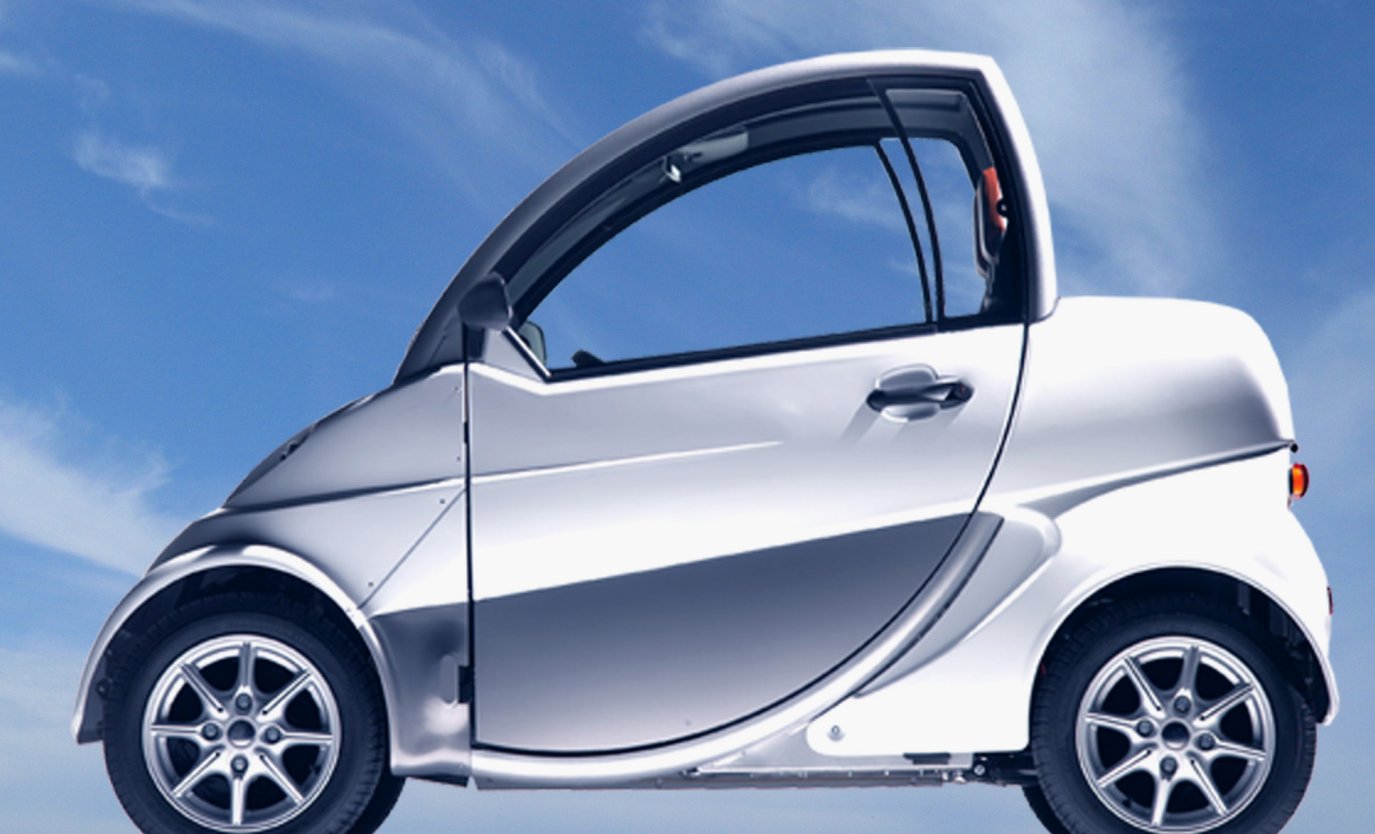
Kurrent Car - 2 cents a mileWhat if there was a way to help the planet, your country, and your wallet all at the same time? Welp, there is. It’s called the Kurrent. It’s the weird-looking car to the left, and it’s now available in the U.S. BUT it’s not street-legal in all states, and in the states it is legal in, you’re only supposed to drive it on roads that have a speed limit of 35 MPH or less. Still, that’s the normal speed limit in most cities, so you could probably drive this around in your city. To be on the safe side, you can check to see if it’s allowed in your state by emailing localrules@getkurrent.com

How Does It Help The Planet?

I’m glad you asked. Since the Kurrent is “refueled” by plugging it into a standard American outlet, it doesn’t use up gasoline, which is a non-renewable resource. Less gasoline equals less drilling to get oil. Also, it is a zero-emissions vehicle, which means that no CO2 or smoke comes out of it. It just whirs around using electricity.

Too much American prideHow Does It Help My Country?

I don’t know if you’ve noticed, but there are more cars on the road now than ever before. Traffic jams are the norm now, and parking in cities has gotten so bad that people don’t even really expect to be able to find a parking space. But with this lil’ car, you don’t take up as much space, so you can maneuver in and out of traffic with ease, and fit into small parking spots.

Since this car doesn’t use gas, it means less of a demand for foreign oil. Less foreign oil means more money stays in the U.S., which is a good thing. It is a patriotic thing.

How Does The Kurrent Help My Wallet?

Excellent question. First, you can buy a brand new one for the low low price of $9,800. That right there is a pretty good price. But wait, there’s more. You won’t have to fill up at the gas station at all. No more money towards gas. Period. And it’ll only cost two cents a mile to run with electricity from your house, so that’s even more savings.

Also, if you own a Kurrent, you qualify for a alternative fuel/electric vehicle federal tax credit. That’s more money in the bank for you.

Blue Kurrent carIt can’t all be good news…

No, it can’t. First, this car doesn’t go much faster than 35 miles per hour, so it’s only legal (in some states) on streets with a 35MPH speed limit. You can’t drive this thing on the highways, just in cities and neighborhoods.

Another disadvantage for some people is its size. Although it has 7.5 cubic feet of trunk space (enough for trips to the grocery store), you won’t be able to pack too much into this car. Also, do not get this car if you are planning on towing big things, like boats or trailers.

All that being said, I wouldn’t mind getting a used Kurrent one of these days (or a used Smart Car). And if you do a lot of city or neighborhood driving, you should consider getting a small electric car. Not only will you have a really quiet, smooth ride, but you’ll be a money-saving, environmental, patriotic machine.

Use Bikes Instead of Cars In College

October 8th, 2007 Posted in bike, college, eco footprint, green living, save money | 2 Comments » Make sure you like EcoJoes on Facebook to stay updated on green ways to save money and help the environment. Just click the "like" button below. Muchas gracias!

Last year, when I was still in college, I used my bike pretty much every day. Why, you may ask? Welp, here are my top three reasons to bike instead of drive.

Save Money By Biking

The initial investment to get a bike can be as expensive as you want, but it’s pretty easy to get a cheap (or even free) bike. I got my bike as a birthday present back in 8th grade, but it’s still going strong. I had to get it fixed up at one point, though, so I took it to 1304 Bikes here in Raleigh. They fix up old bikes and give them away, and they were able to help tell me how to fix my bike. If you are buying a bike, look on OhSoHandy or other websites to find some great deals on used bikes.

The biggest way that biking saves you money, though, is because of all the money you’ll be saving by not driving your car. If you cut out all the gas that you normally buy, plus all the repair costs of your car, you’ll be surprised at how much money you’ll save. It’s a big reason why I was financially able to get through college without having loans out the ying yang.

Look at all that non-polluting going on!Lower Your Pollution and Your Eco-Footprint

If you’re using your bicycle, you’ll be creating a lot less pollution (zero, believe it or not) than by driving your car to get to places. Cars use up a lot of resources (gasoline and oil especially) and also are a huge source of pollution in today’s modern dog-eat-dog world. In fact, driving a car is the most polluting thing that an average person does. So riding a bike (and not driving your car as much) is a great way to cut down on that hefty ol’ eco-footprint of yours.  Plus, by riding your bike, you can enjoy all the natural scenery that you’ll be biking past, instead of concentrating on the back of the car in front of you while you’re in a traffic jam.

Get Yo’self Some Exercise And Wake Up

In college, I had a job that required me to be on campus pretty early (2:00 AM on Wednesdays!). The only thing that woke me up for that shift (besides good ol’ coffee) was biking about 2 miles to get there. Biking helped wake me up and keep me all energized for the whole day, whether I was going to class or work. Plus, it kept me in pretty good shape, even though me and my friends would eat a bunch at the dining hall. Without biking, I probably would have been morbidly obese and sleeping through all of my classes.

Alarm ClockGet To Class On Time

Now I know most of you have probably never been late for class ever, but back in the day, I was usually about 5 to 10 minutes late (especially for those huge auditorium classes).  The embarassment and shame this caused me was almost too much to handle, but then I got me a bike and have never looked back since.  It’s amazing how much faster you can get around on campus by using a bicycle.  You can fly by people, and make it across campus in about a quarter of the time that it takes to walk.  So do yourself a favor if you’re in college (or even if you’re not), and go get a bike.  After a week of using it, you’ll wonder why you didn’t start biking sooner.

Paper nor plastic

October 5th, 2007 Posted in green living, paper, plastic, reusing | 1 Comment » Make sure you like EcoJoes on Facebook to stay updated on green ways to save money and help the environment. Just click the "like" button below. Muchas gracias!

“Paper or plastic?” It’s an age-old question that has haunted people since the dawn of time, if not longer.  Some people get paper bags for their strength.  Others get plastic bags for the fun handles.  But if you’re trying to lower your eco-footprint, then you are basing this decision on its environmental impact.  cheap nfl jerseys Hopefully, this here will help you make your decision.

Consumption:

Paper Bags: American use over 10 billion paper Italia bags each year. Around 14 million trees are chopped down each year for paper bag wholesale jerseys production.

Plastic Bags: If you thought 10 billion was a lot, how about this: around 100 billion plastic bags are used in America each year. That takes about 12 million barrels of oil annually, just for bags.  Dang.

Production:

It takes close to 4 times as much energy to make wholesale mlb jerseys a paper bag compared to a plastic bag. But, plastic winter bags are made from oil (non-renewable resource), while paper bags are made from trees (renewable resource).

SmokestacksPollution:

Paper Bags: Toxic chemicals used in paper bag production (like bleach and acid) contribute to water pollution and air pollution (acid rain).  Surprisingly, paper bag production generates 70 percent more air pollution and 50 times more water pollution than plastic bags.

Plastic Bags: Plastic bag production requires hazardous chemicals also.  According to an EPA ranking of chemicals that generate the most hazardous waste, 5 of the top 6 chemicals are used in plastics production.  Plus, hundreds of thousands sea animals die each year from eating plastic bags, which clog their New digestive tracts or choke them.

Recycling:

Paper Bags: Lots of chemicals have to be used to recycle paper bags. Once a bag is wholesale nba jerseys recycled, it’s more likely to be used to make cardboard than another paper bag.

Plastic Bags: A lower percentage of plastic bags than paper bags are recycled. Increasingly, plastic bags collected for recycling are instead sent to countries such as China and India, where they can be cheaply burned due to weak environmental laws.  Good ol’ India and China.

Biodegradable:

Paper Bags: Paper bags do break down after a Wholesale Nike San Francisco 49ers Jerseys while, but not if they’re in a modern landfill. In that case, 95 percent of the garbage is buried under layers Krimskrams! of soil, so air and sunlight can’t reach the bags to decompose them.  So they just sort of sit there.

Plastic Bags: They don’t break down.

My Conclusion:

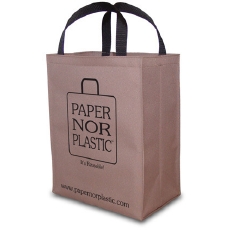
EcoJoes - Paper Nor Plastic - Reusable Cloth bagUse a reusable bag. Keep a cloth bag in “clase your car, and just use that whenever you go shopping for something.  When I worked at Fresh Market in Asheville, plenty of people came through with cloth bags.  These bags can hold more than paper or plastic bags, they’re stronger, and you don’t end up getting a bunch of disposable bags that will clutter up your house.  Plus, you can get bags with jawsome designs or slogans on the side, which makes you cooler than Quiz them My people that are using plain ol’ plastic or paper bags, thus bolstering your poor self-esteem.   And that is what really matters.

New York family goes mega green

September 25th, 2007 Posted in green living, off the grid, reusing, save money | 9 Comments » Make sure you like EcoJoes on Facebook to stay updated on green ways to save money and help the environment. Just click the "like" button below. Muchas gracias!

Way up on the ninth floor in a Manhattan apartment, there is a family living off of the power grid. With only a single solar panel providing all their power (for a laptop and a light), the Beavans’ apartment is quiet and calm. A wooden compost bin sits in the kitchen, full of vegetable peels, fruit cores, and worms. When you look around their house, you might be surprised to find no toilet paper, shampoo, or bottles of toiletries. You might think they’re weird if you haven’t met them, but Colin Beavan, his wife Michelle, and their young daughter Isabella are, in many ways, the typical American family.

“The concept is that we should have no net environmental impact, which is, of course, technically not feasible”, says Colin. “So the idea is that we would reduce our negative impact and increase our positive impact.”

And reduce it they have. Ecozoic Not only by cutting off their electricity (not even the fridge is turned on!), but other ways as well. Instead of using disposable coffee cups every day, Colin takes along his faithful glass jar to the nearest coffee shop. They buy food at the nearby farmers’ market almost daily (due to not using the refrigerator). They’ve got rid of lots of harmful, caustic cleaners, and now rely on baking soda, borax, and vinegar to keep things spiffy and clean. They have even sworn off of all carbon-producing transport, now walking or biking to school and work.

Although Michelle says there are times she regrets her family’s decision to turn so green, she did say there have been cheap nba jerseys some unexpected benefits. “In essence, the project has really slowed down time, which is pretty amazing considering how fast time has become, and especially with us living in New York – you come home to a quiet, soothing cocoon.”

One thing I still don’t understand is how they don’t use toilet paper. When asked what they used instead, Colin answered, “What I’ll tell you, is this: There are many places all over the world that wholesale jerseys China don’t use toilet paper.” So it’s still a mystery to me. Maybe a bidet? I don’t know.

A sort of counter-intuitive thing is that most people in New York City Quote (and other big cities) already have a smaller impact than the rest of the population. New Yorkers, on average, use services that emit about a third of the carbon per person as most of the rest of the country. This is mainly due to the economies of scale.

Anyhoo, Colin Beavan is behind the upcoming film “No Impact Man”, which should be out in early 2009. It’s about his and his family’s life during Hello their one year as super low impact city dwellers. There will also be a cheap jerseys book by the same name (published in an eco-friendly way). I plan on checking it out once it hits the stores.